FORUM PROGRAM
Agenda
September 4, 2026 · EDITION Hotel Singapore
One day of high-impact sessions exploring the forces reshaping U.S.–ASEAN economic engagement.
FORUM PROGRAM
September 4, 2026 · EDITION Hotel Singapore
One day of high-impact sessions exploring the forces reshaping U.S.–ASEAN economic engagement.
By invitation only
This conversation will examine how the U.S. is shaping the rules of the road for emerging technologies globally, particularly through export controls, outbound investment screening, and AI governance frameworks. With measures such as advanced semiconductor restrictions and evolving AI export policies, panelists will explore how these tools are being applied in Asia and how companies can navigate a landscape where innovation, national security, and market access are increasingly intertwined.
As the U.S. positions itself as both an energy technology leader and a major energy exporter, this session will decode the dual-track strategy shaping the region. From LNG exports and critical minerals supply chains to civil nuclear cooperation under 123 agreements and energy infrastructure financing, the discussion will explore how U.S. policy is advancing energy security and how ASEAN markets fit into that equation.
 Anna Baweh
· Director of Malaysia and Southeast Asia Government Affairs
Anna Baweh
· Director of Malaysia and Southeast Asia Government Affairs
 Kathy Wu
· Regional President, Asia Pacific and India Upstream
Kathy Wu
· Regional President, Asia Pacific and India Upstream
 Dato' Ir. Ts. Razib Dawood
· Executive Director
Dato' Ir. Ts. Razib Dawood
· Executive Director
 Jackie Surtani
· Regional Director, Singapore
Jackie Surtani
· Regional Director, Singapore
 Sharad Somani
· Executive Director / Partner
Sharad Somani
· Executive Director / Partner
 Stephanie Duran
· Deputy CEO
Stephanie Duran
· Deputy CEO
As AI reshapes every industry, economic competitiveness increasingly depends on a skills-first approach to workforce development, talent mobility, and technology adoption. This session examines how organizations can move beyond traditional job-based models to skills-based strategies that unlock opportunity for people and productivity for business. Panelists will explore how policy trends around AI leadership, immigration, digital skills investment, and reshoring are reshaping labor markets, and how companies are using skills intelligence to respond. They will also discuss how these changes are unfolding in ASEAN, where employers must balance local workforce needs with global innovation goals, build more equitable and transparent talent marketplaces, and create continuous learning cultures that prepare workers for the future of work.
 Theodora D'cruz
· Director of Government Relations (North America)
Theodora D'cruz
· Director of Government Relations (North America)
 Cher Whee Sim
· Vice President, People Strategy, Technology & Workforce AI Transformation
Cher Whee Sim
· Vice President, People Strategy, Technology & Workforce AI Transformation
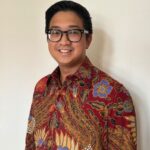 Rifki Weno
· Executive Director
Rifki Weno
· Executive Director
 Sarmista Mondol
· Business Transformation and IBM Garage Leader
Sarmista Mondol
· Business Transformation and IBM Garage Leader
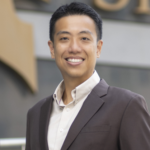 Jared Nai
· Associate Professor of Organisational Behaviour & Human Resources; Pillar Lead (Transforming Organisations)
Jared Nai
· Associate Professor of Organisational Behaviour & Human Resources; Pillar Lead (Transforming Organisations)
 Chandler Morse
· Chief Corporate Affairs Officer
Chandler Morse
· Chief Corporate Affairs Officer
As financial systems digitize, the U.S. is actively shaping global standards around transparency, security, and cross-border flows. From digital asset regulation and tokenization to payment system interoperability and AML enforcement, this session will decode how emerging frameworks, including legislative efforts in the U.S. are influencing the governance of digital finance. The discussion will explore how these policies are being interpreted and applied in ASEAN markets, and how trust is being built or challenged amid rapid technological change and geopolitical fragmentation.
Against a backdrop of evolving U.S. trade, industrial, and supply chain policies, how can the United States and ASEAN work together to build more resilient, secure, and accessible healthcare systems? This discussion will explore the future of healthcare infrastructure, pharmaceutical and medical supply chains, public-private partnerships, and the role of emerging technologies in advancing regional health security and economic competitiveness.
As global supply chains and trade relationships recalibrate, this session will decode how U.S. economic strategy toward ASEAN is evolving in practice. From tariff realignments and trade enforcement to the future of frameworks like DEFA, the discussion will unpack how Washington is balancing competitiveness, resilience, and geopolitical priorities and what that means for companies operating across Southeast Asia.
ASEAN Deputy Secretary General Satvinder Singh
Networking reception in EDITION Hotel Foyer